Why Books Are Becoming the New Cultural Status Symbol
Why fashion brands, musicians and creative companies are making books again and why physical books seem to matter more now.
I always chuckle because I know what they’re thinking. In such a digital age, how does a business based around making physical, tangible things actually work?
But look around and books seem to be everywhere.
People are self-publishing. Fashion houses are starting book clubs. Musicians are opening up their archives. Brands are publishing books about their history and culture. Exhibition catalogues are becoming collectible. Artists are turning years of photographs, artwork and unseen material into books.
Even the coffee-table book feels right for the moment.
Part of the reason is simple. We spend too much time looking at screens. And it’s tiring.
A physical book offers something different.

Books are becoming objects of taste, identity and culture again — not just things we read. Photo: Luisa Brimble.
A recent Marketing-Interactive article, “Why books are becoming fashion’s latest flex”, looked at the growing relationship between books, fashion and luxury. One of its main points is that books are becoming a cultural signal.
What you read says something about you.
We’ve always known that. People colour-code their bookshelves, buy books they may never read, and keep certain titles because they say something about who they are.
But now it feels more pronounced.
In a world of endless feeds, short videos and automated content, a physical book feels different. It has weight. You keep it. You lend it. You come back to it. It can sit on a shelf for years.
Marketing-Interactive describes this as a move towards “intellectual luxury”. Status is no longer only about what you wear or buy. It can also come from what you know, what you collect and what you are interested in.
That feels very relevant to publishing right now.
Why are brands making books?
Brand publishing isn’t new. Fashion houses, record labels, galleries, architects and designers have been making books for decades. But there is a difference between making a book and making an expensive brochure. The better projects use publishing to explore the culture around a brand, artist or organisation.
For a fashion house, that might mean old campaigns, sketches, garments and photography.
For a record label, it could be flyers, records, photographs, club nights and stories from artists.
For a musician, it might be years of unseen images, posters, artwork, notebooks and touring material.
And often the most interesting book isn’t directly about the brand or artist.
It is about the world around them.
That is where things get interesting.
A book can do something a campaign can’t
Most marketing disappears quite quickly. Campaigns end. Social posts get buried. Websites change. A book works on a different timescale. It could still be sitting on somebody’s shelf twenty years from now.
So the question becomes less: What do we want to say right now?
And more: What part of this story is worth keeping?
That is a much better place to start. It is also why these projects work best when they are treated as publishing, not marketing.
Marketing often starts with what a company wants to say. Publishing should start with what somebody would actually want to read, see or own.
The archive is often the real starting point
A lot of good books already exist in pieces. They are sitting on hard drives, in cupboards, storage boxes, old websites and people’s homes.
Photographs. Flyers. Posters. Sketchbooks. Press cuttings. Artwork. Record sleeves. Film. Emails. Early designs.
Things nobody has looked at for years.
Artists, musicians and companies can build up huge archives without ever really thinking of them as archives. Making a book gives you a reason to go back through it.
And that process can change the whole idea. You might start out thinking you are making a simple career retrospective. Then you realise the material tells a much bigger story about a city, a scene, a movement or a period of time. That is when an archive book becomes more than a record of one person or company.
It starts to become cultural history.
Music is a good example
Over the last twenty years, a lot of music has become less physical. Records became files.
Artwork became thumbnails. Tickets became QR codes. Flyers became Instagram posts.
Music magazines disappeared and at the same time, interest in vinyl, music photography, record sleeve design, club culture and independent labels has grown.
That gives the physical music book a new role.
A book can put all of those pieces back together.
Photography can sit next to artwork. Flyers can sit next to interviews. Personal memories can sit alongside the wider history of a scene.
You can tell the story of an artist.
But you can also tell the story of everything happening around them.
That is why we think musicians, DJs, producers and record labels should be looking at their archives now.
If you’ve made the music, there is often a much bigger story sitting around it.
A first look inside our forthcoming deadmau5 book, bringing together photography, artwork and archive material from across his career.
The coffee-table book deserves more credit
The phrase coffee-table book can make these projects sound less serious than they are.
It suggests a big photography book that mainly looks good on a table.
And there is nothing wrong with making a beautiful object.
But the best coffee-table books can also have real depth.
They can bring together photography, writing, interviews, archive material, research and graphic design. And books give you control over how material is seen. An image on Instagram might get a few seconds.
In a book, that same image can fill a spread. It can sit next to another image. It can become part of a sequence.
That matters.
A pile of good material is not automatically a book. The work is in deciding what stays, what goes and how the whole thing fits together.
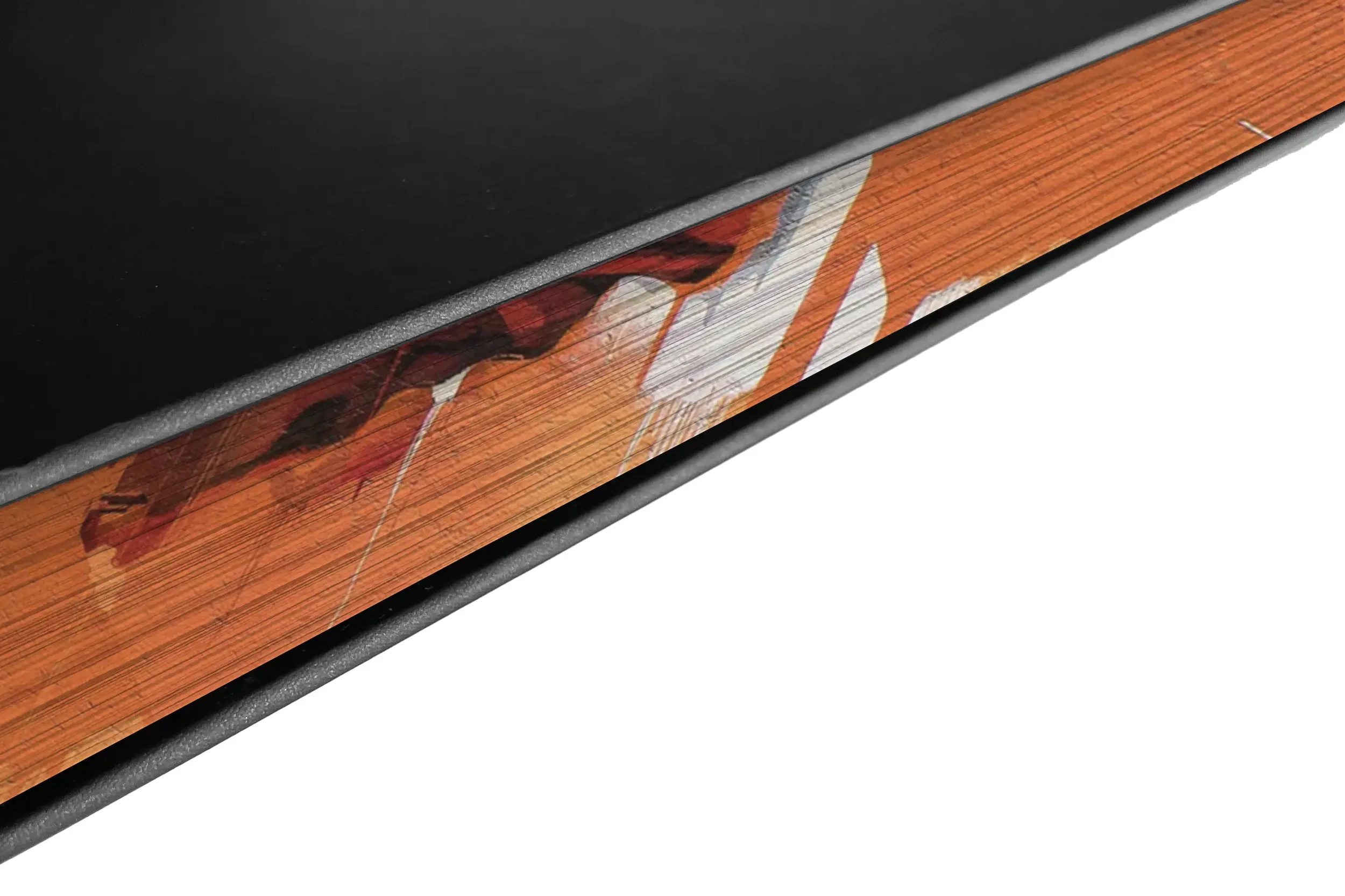
A closer look at the edge print for our forthcoming limited edition book with Dutch artist DOES.
The problem with branded books
There is a risk here too.
As books become fashionable, more brands will make them simply because everyone else is making them.
That usually shows.
If a book only exists to explain how good a company is, it will feel like a brochure.
The better books give something to the reader. They show material that hasn’t been seen before. They tell stories properly and they document something worth keeping.
They give someone a reason to own the book even if they have no connection to the brand.
There is a simple test:
Would somebody still want this book if the logo wasn’t on the cover?
If the answer is yes, there is probably something worth developing.
You don’t need to have the whole book worked out
People sometimes think you need a fully formed idea before you can start thinking about a book.
You really don’t.
A book can start with very little. An idea. A career. An anniversary. An archive. A group of photographs. A story. Or simply the feeling that there is a book in this somewhere.
Then the questions start. What is the story? Who is it for? What material already exists? What is missing? Should it be chronological or thematic? Who should contribute? How visual should it be? How many copies make sense? Could there be a special edition? Should it go through bookshops, be sold direct, or both?
This early stage is often the most important part of making a book. It is where a loose collection of material starts to become an actual publishing idea. And it doesn’t have to be a public-facing project either.
Some books are made for businesses that want to document their history, mark an anniversary or capture the story of a company. Others are much more personal, built from photographs, letters, memories and family archives.
Sometimes the audience is thousands of people. Sometimes it is simply the people who were there.
We see this a lot at Soi. Sometimes someone comes to us with a very clear concept. Sometimes they have twenty years of material and no idea what the book should be. Both can work.
The important thing is finding the story that gives all that material a reason to exist together.
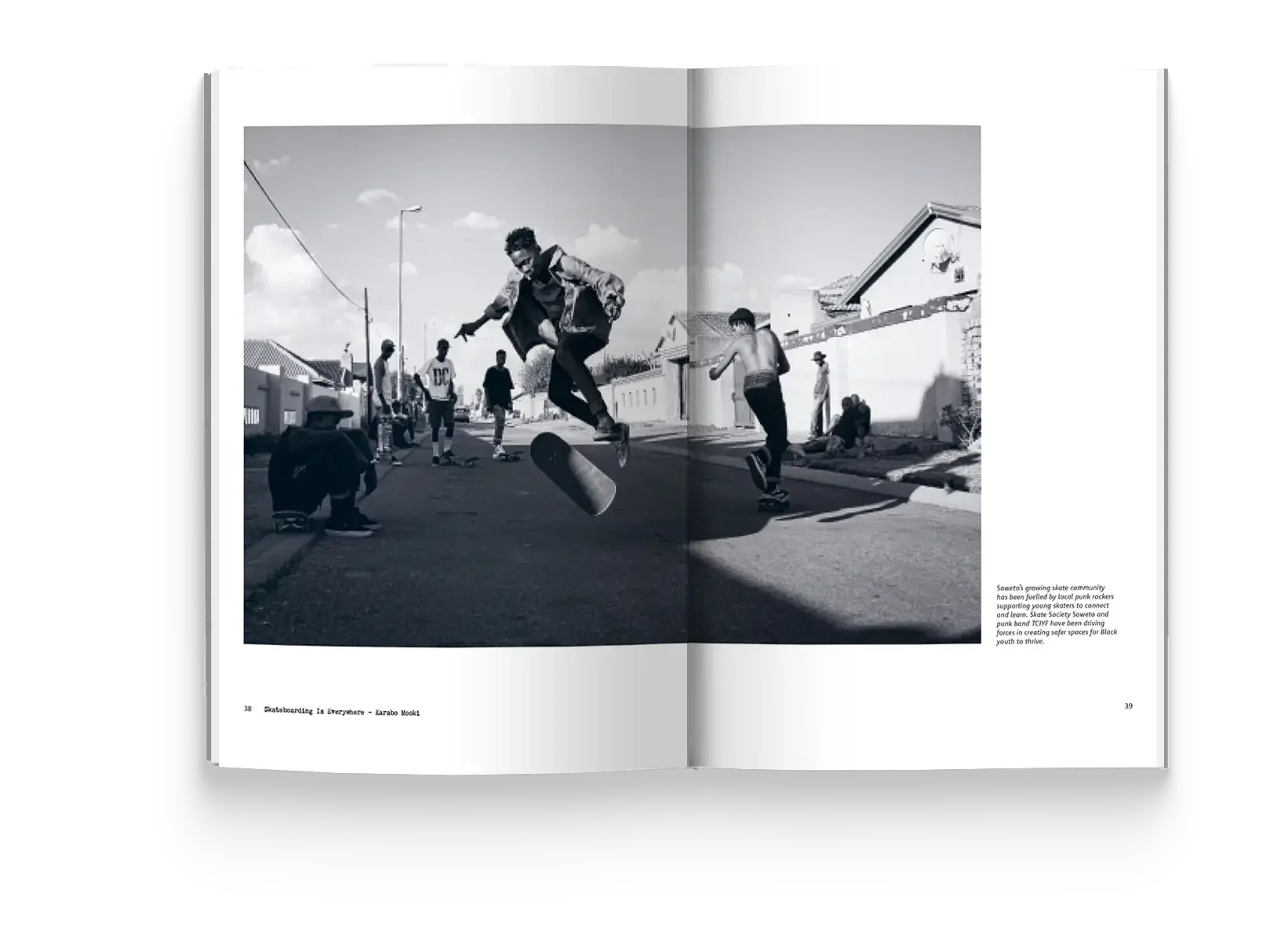
From True World Skate, published by Thames & Hudson and MIT Press, August 2026. Photograph by Karabo Mooki.
Why physical books matter now
There is one other reason books feel important right now. Making digital content has become incredibly easy. Text, images and video can all be generated quickly, and huge amounts of material can be produced almost instantly.
That doesn’t make digital work worthless. But it may make selection, context and physical objects more valuable.
A book is built from decisions. Someone chose these photographs instead of the other 5,000. Someone decided who to interview, found an old flyer in a box, worked out what belongs on page one and what belongs on page 200, then turned all of that into a physical object.
Those choices are part of the value.
The internet gives us almost everything. A book gives us something specific.
Don’t make a book just because books are fashionable
Books take time and money to make. And once you have 1,000 or 2,000 copies, they need to be stored, sold and delivered.
So there has to be a good reason to make one.
But if you have an archive, a body of work, an audience or a story worth documenting, a book can do something few other formats can. It gives that material a permanent form.
Not another post or reel that disappears after a few days, but something someone might still have on their shelf twenty years from now.
Thinking about making a book?
Soi works with artists, musicians, brands, businesses, families and individuals to turn archives, photographs and ideas into books.
We can help shape the story, structure and material, then take the project through editorial development, design, production and publishing.
You don’t need to have it all figured out before you start.