One Sticker, One Story: Parma, Parmalat, and the Collapse Behind the Glory
One of our favourite stickers in Tifo: The Art of Football Fan Stickers is this one, featuring Calisto Tanzi of Parma.
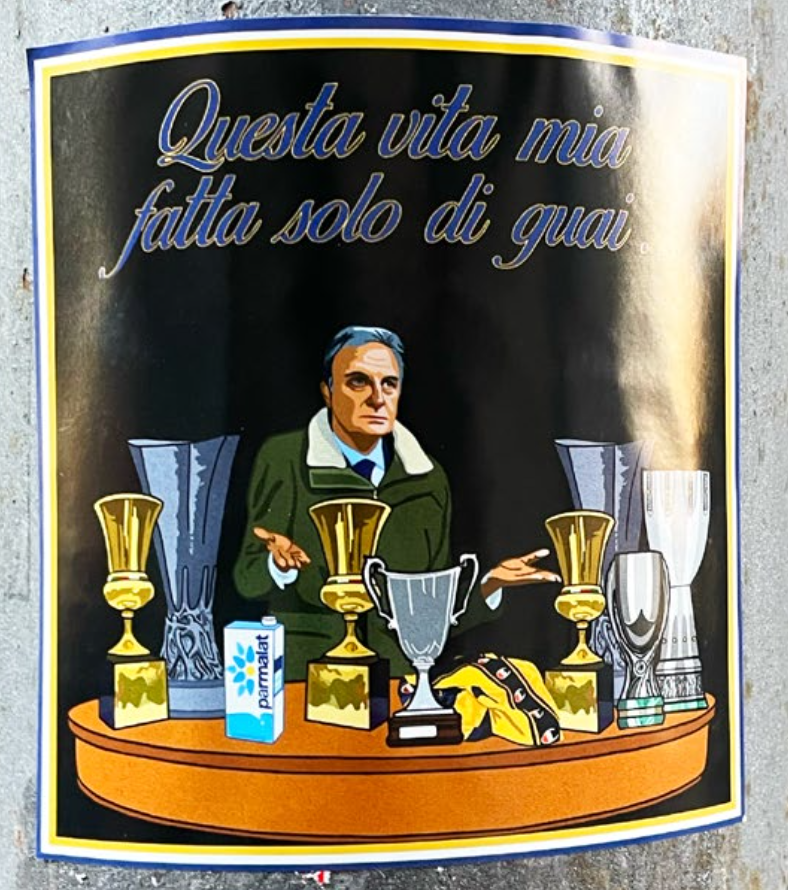
“Questa vita mia fatta solo di guai.”
This life of mine is made only of trouble.
At the centre of the sticker is Calisto Tanzi, founder of Parmalat and the man who bankrolled Parma through their golden years.
In the 1990s, Parma were one of Europe’s most compelling sides. With players like Hernán Crespo, Juan Sebastián Verón and Lilian Thuram, they won the UEFA Cup, lifted the Coppa Italia, and wore some of the era’s most iconic shirts.
They were a club built on serious money and smart recruitment, competing with Italy’s elite.
That success, like much in football, rested on something far more fragile.
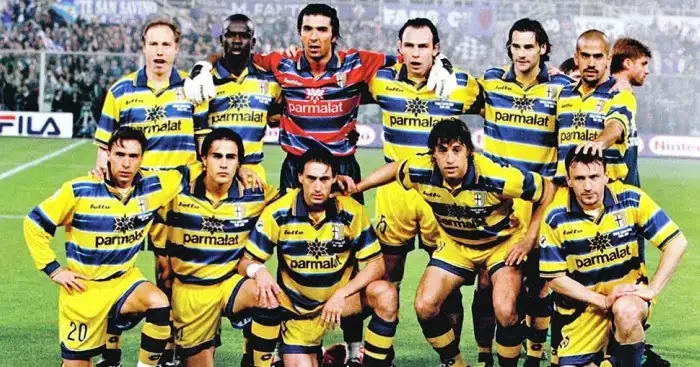
Parma’s late-1990s side, backed by Parmalat, during the club’s golden era in European football.
A Golden Era on Fragile Ground
In the sticker, Calisto Tanzi sits behind a table of Parma trophies and a Parmalat milk carton, beneath the line “Questa vita mia fatta solo di guai” — “This life of mine is made only of trouble.”
It’s a sharp piece of football satire, using a single image to connect Parma’s years of success with the scandal that ultimately helped undo them.
The reality behind it was even more dramatic. In the early 2000s, Parmalat collapsed in what became one of Europe’s largest financial scandals, with a reported €14 billion hole in its accounts. The company had long presented itself as a global success story, but much of that image was built on false accounting and financial deception. When it unravelled, it didn’t just bring down a business empire, it exposed how closely Parma’s rise had been tied to that same fragile foundation.
What followed was the slow unpicking of both a corporation and a football club. Tanzi’s fall was swift, later convicted of fraud and false accounting, while Parma were left to deal with the consequences. Stripped of their financial backing, they entered administration, and by 2015 were declared bankrupt, forced to restart in Serie D.
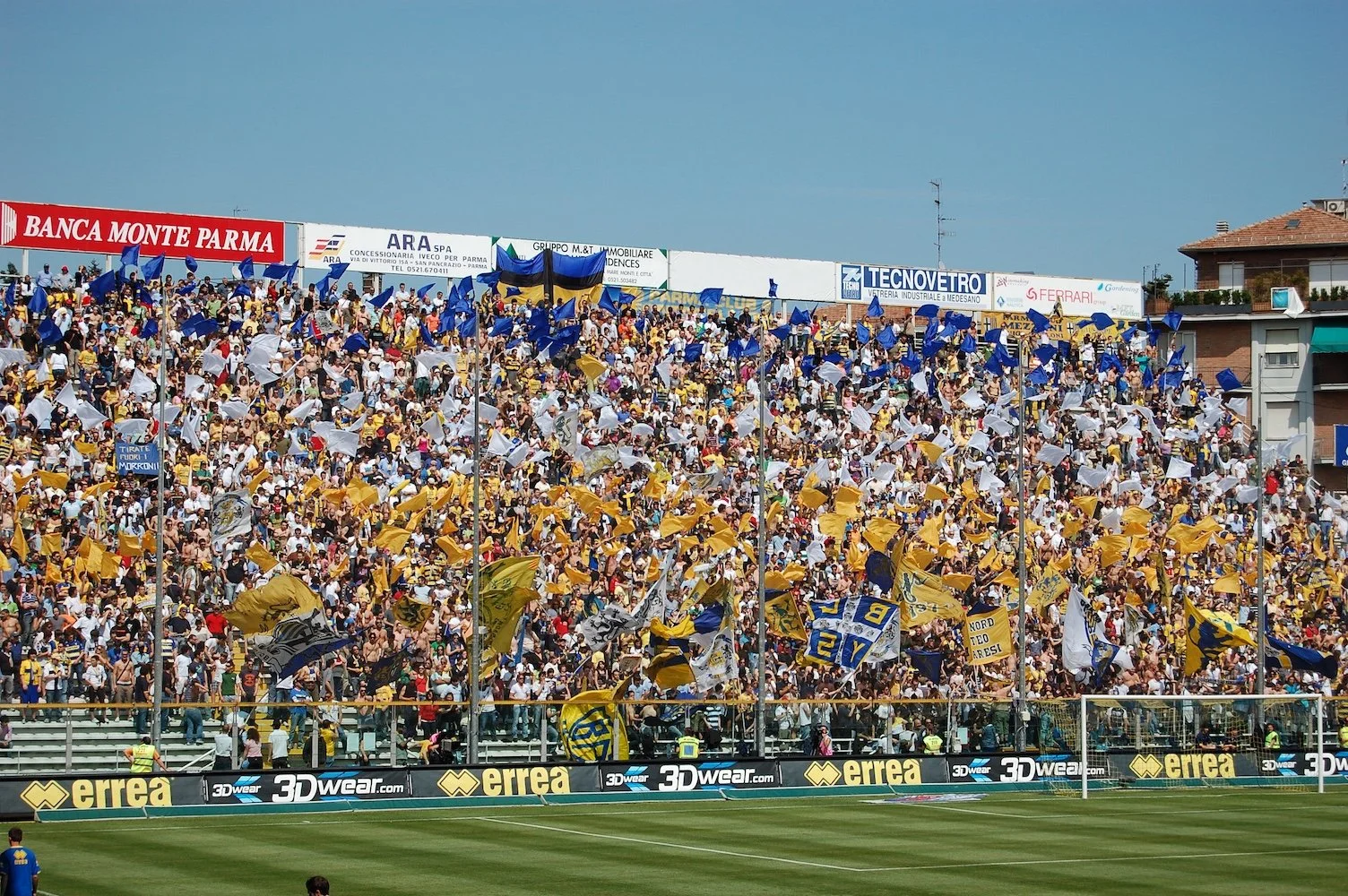
Stadio Ennio Tardini, home of Parma Calcio 1913
What a Sticker Can Hold
The sticker captures all of that with precision. The trophies remain, but so does the tension around them. Tanzi, arms out, sits somewhere between denial and resignation. The Parmalat carton is the detail that lands it — a quiet reminder of where it all began, and how it all fell apart.
This is what football stickers do at their best. They compress entire histories — rise, excess, collapse, consequence — into something you pass on a wall. No press conference, no statement, just a visual that holds the story.
That’s the thread running through Tifo: The Art of Football Fan Stickers. These small, often overlooked objects carry far more than surface-level graphics. They hold memory, context, and commentary — telling stories that sit just beneath the game itself.
Continue Exploring
If you’re interested in football stickers and the stories behind them:
Pick up a copy of Tifo: The Art of Football Fan Stickers here
Read more about our sticker spotting in Glasgow here
and explore our trip through Bali’s street sticker scene here